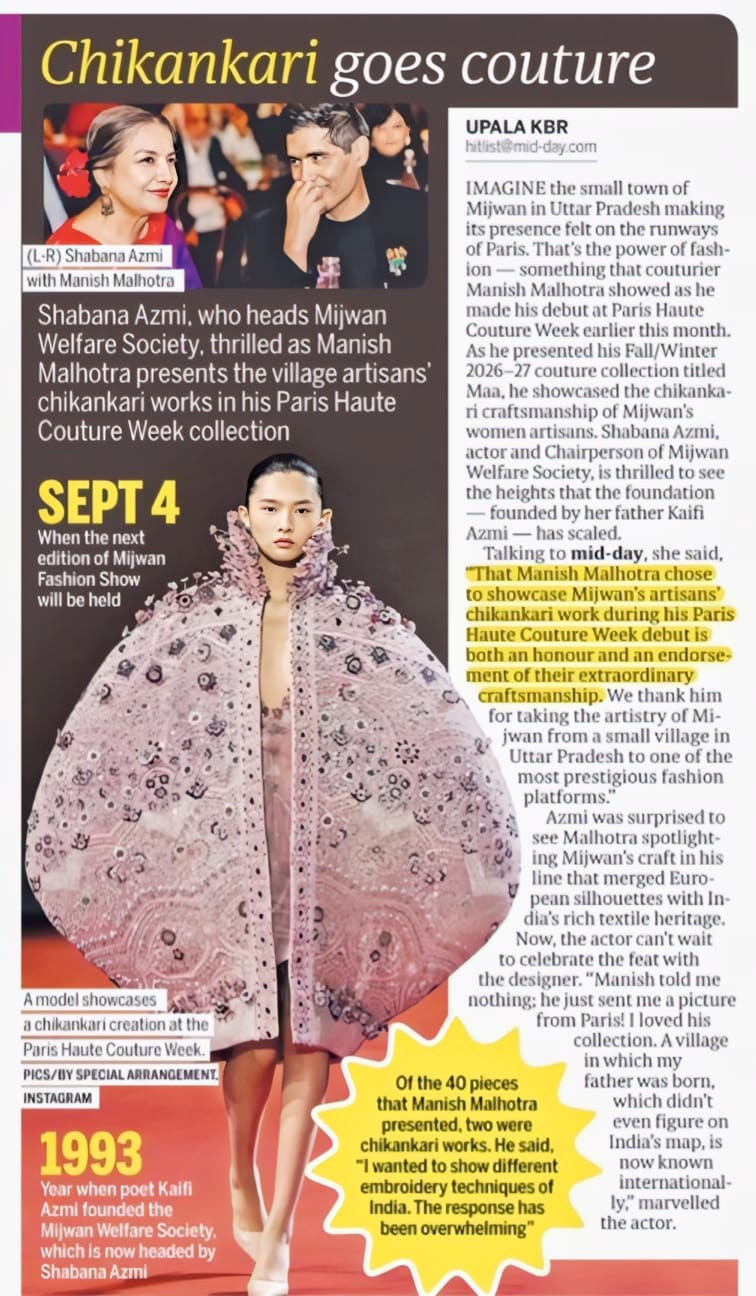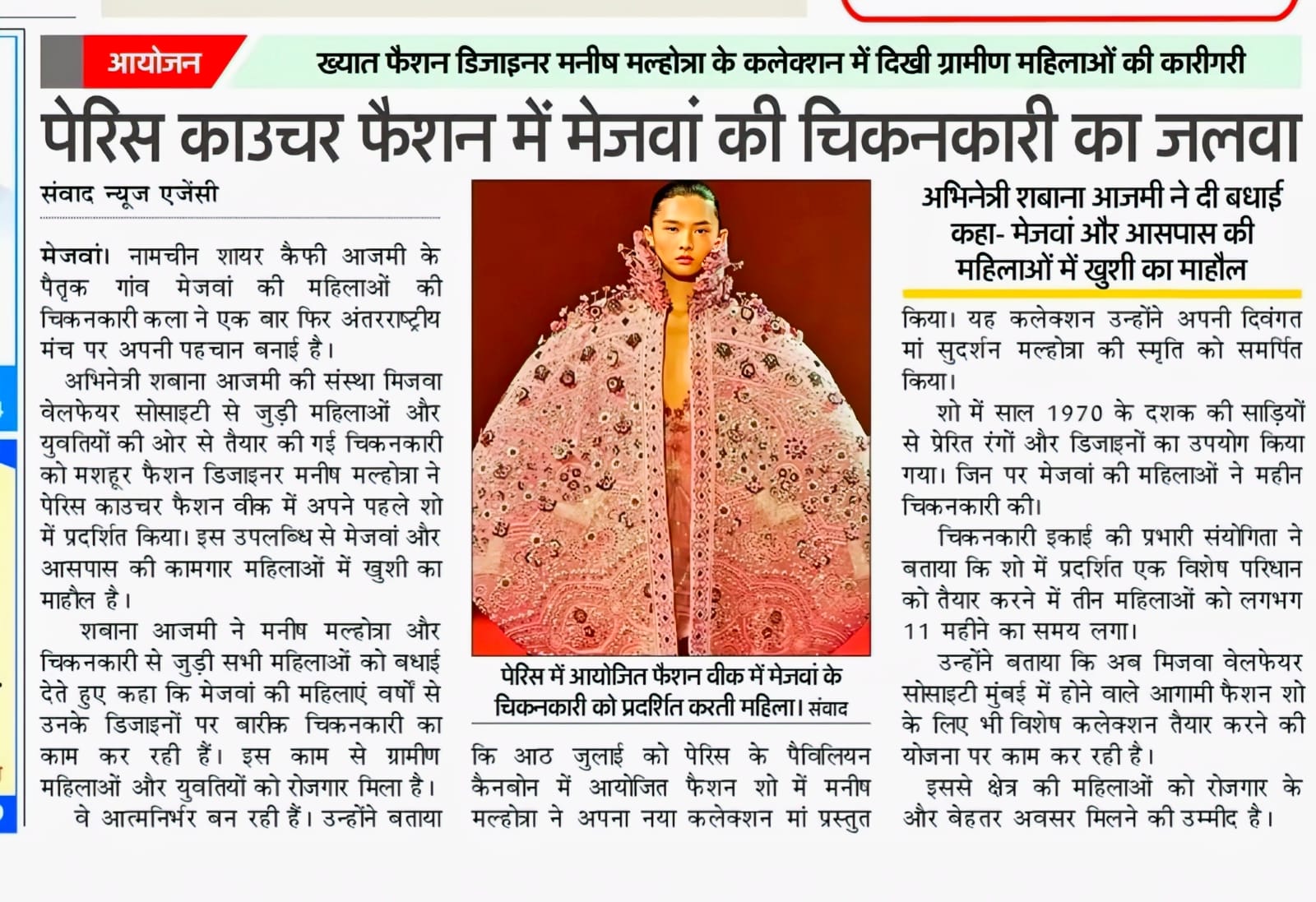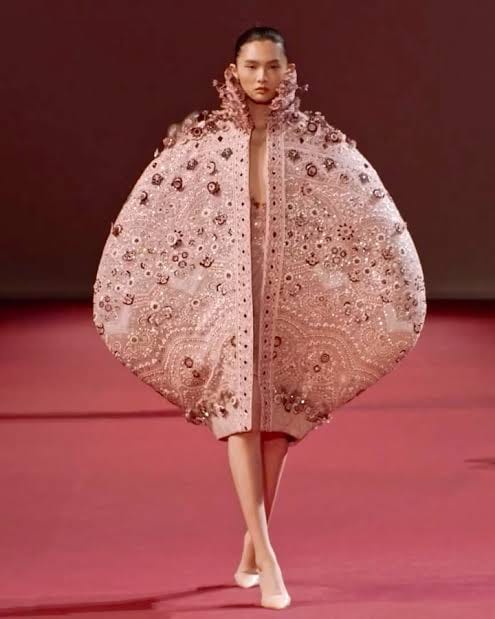
From the villages of Mijwan to the runways of Paris, the journey of our women artisans continues to inspire the world.
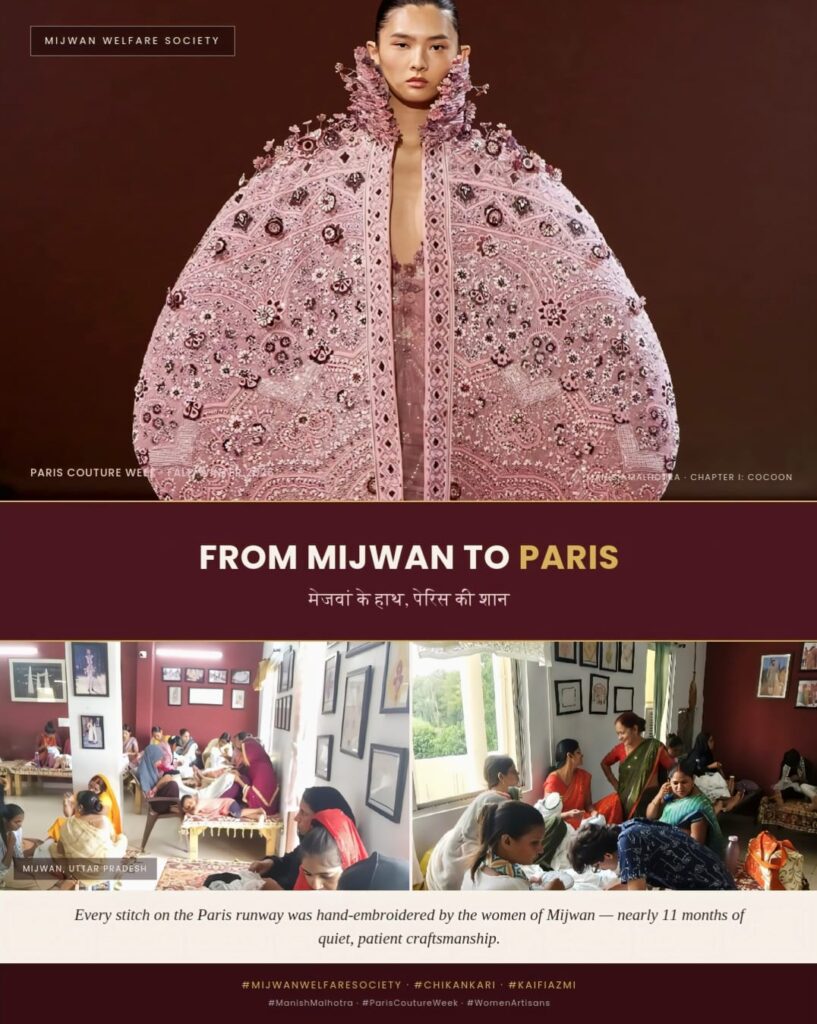
In a proud milestone for India’s rich textile heritage, the exquisite chikankari craftsmanship of the women artisans of Mijwan Welfare Society has once again graced one of fashion’s most prestigious platforms—Paris Couture Week.
Featured in celebrated designer Manish Malhotra’s Fall/Winter 2026 Couture collection, Chapter I: Cocoon, the collection beautifully showcased the timeless elegance of handcrafted chikankari while bringing the extraordinary skills of rural women artisans onto the global stage.
This is far more than a fashion achievement. It is a celebration of dedication, dignity, and the transformative power of craftsmanship.
Eleven Months of Quiet Dedication
Among the couture pieces presented at the Pavillon Cambon in Paris was a remarkable chikankari creation that required nearly eleven months of meticulous hand embroidery to complete.
Every delicate motif, every intricate stitch, and every embroidered detail represents countless hours of patience and extraordinary skill. Behind the elegance seen on the runway lies the quiet determination of women who have spent years mastering an art form passed down through generations.
Their work reminds us that true luxury is not measured by labels, but by the human hands, heritage, and devotion behind every creation.
When Heritage Meets Haute Couture
For decades, Mijwan Welfare Society has worked to empower women through education, skill development, and sustainable livelihoods. What began as a vision to create opportunities for rural women has evolved into a remarkable story of social transformation.
Today, the intricate embroidery created in the small village of Mijwan, Uttar Pradesh, stands proudly alongside the finest couture in the world.
By incorporating Mijwan’s chikankari into his Paris Couture Week debut, Manish Malhotra not only celebrated India’s textile traditions but also introduced global audiences to the remarkable craftsmanship of women artisans whose work often remains unseen.
Speaking about the collection, the designer shared that two of the forty couture looks featured chikankari, expressing his desire to showcase the diversity of India’s embroidery traditions before an international audience.
Shabana Azmi Celebrates the Artisans
Veteran actor, social activist, and Chairperson of Mijwan Welfare Society, Shabana Azmi, expressed immense pride in the achievement and congratulated every artisan involved in creating the collection.
Reflecting on the milestone, she noted that the recognition received at Paris Couture Week is not only an endorsement of the artisans’ exceptional craftsmanship but also a testament to how rural women can transform their lives through skill, perseverance, and opportunity.
For the women of Mijwan and the surrounding villages, every stitch has become a step toward financial independence, dignity, and self-reliance.
More Than Fashion
Behind every embroidered garment is a story rarely seen on the runway.
It is the story of women balancing family responsibilities while preserving centuries-old embroidery traditions.
It is the story of mothers teaching daughters the art of chikankari.
It is the story of patient hands that spend months perfecting a single masterpiece.
And now, it is the story of a rural Indian village whose artistry has captivated one of the world’s most celebrated fashion capitals.
A Legacy That Continues to Inspire
Founded in 1993 by the legendary poet Kaifi Azmi, Mijwan Welfare Society has remained committed to creating opportunities for rural communities through education, healthcare, skill development, and women’s empowerment.
Over the years, the society has demonstrated that preserving traditional crafts can also create sustainable livelihoods.
The Paris Couture Week presentation is another significant chapter in this journey—a powerful reminder that when craftsmanship is nurtured and artisans are empowered, local traditions can find a place on the global stage.
From Mijwan to Paris
The journey from a small village in Uttar Pradesh to the runways of Paris is not simply a story of fashion.
It is a story of vision.
It is a story of resilience.
It is a story of women whose extraordinary craftsmanship has carried the heritage of India across continents.
As the world applauded the beauty of Chapter I: Cocoon, it also celebrated the countless hours, unwavering dedication, and timeless artistry of the women of Mijwan.
Their hands stitched more than couture.
They stitched together a story of hope, empowerment, and pride that will inspire generations to come.